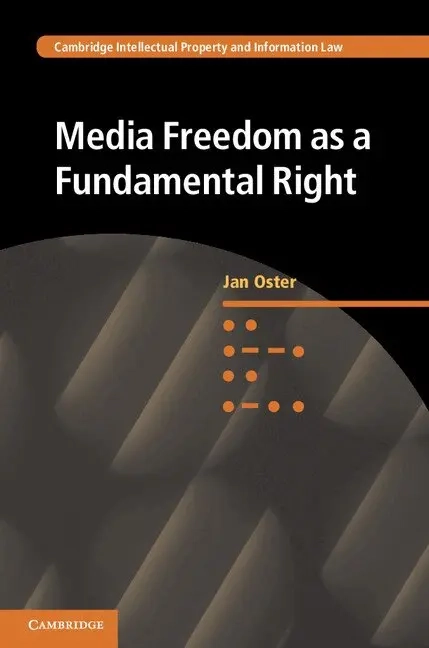
Media Freedom as a Fundamental Right
- Utgiven: 2015
- ISBN: 9781107098954
- Sidor: 338 st
- Förlag: Cambridge University Press
- Format: Inbunden
- Språk: Engelska
Om boken
Domestic constitutions and courts applying international human rights conventions acknowledge the significance of the mass media for a democratic society, not only by granting special privileges but also by imposing enhanced duties and responsibilities to journalists and media companies. However, the challenges of media convergence, media ownership concentration and the internet have led to legal uncertainty. Should media privileges be maintained, and, if so, how is 'the media' to be defined? To what extent does media freedom as a legal concept also encompass bloggers who have not undertaken journalistic education? And how can a legal distinction be drawn between investigative journalism on the one hand and reporting on purely private matters on the other? To answer these questions, Jan Oster combines doctrinal and conceptual comparative analysis with descriptive and normative theory, and argues in favour of a media freedom principle based on the significance of the media for public discourse.
Åtkomstkoder och digitalt tilläggsmaterial garanteras inte med begagnade böcker
Mer om Media Freedom as a Fundamental Right (2015)
I maj 2015 släpptes boken Media Freedom as a Fundamental Right skriven av Jan Oster. Den är skriven på engelska och består av 338 sidor. Förlaget bakom boken är Cambridge University Press.
Köp boken Media Freedom as a Fundamental Right på Studentapan och spara pengar.
Referera till Media Freedom as a Fundamental Right
Harvard
Oster, J. (2015). Media Freedom as a Fundamental Right. Cambridge University Press.
Oxford
Oster, Jan, Media Freedom as a Fundamental Right (Cambridge University Press, 2015).
APA
Oster, J. (2015). Media Freedom as a Fundamental Right. Cambridge University Press.
Vancouver
Oster J. Media Freedom as a Fundamental Right. Cambridge University Press; 2015.
citeproc-js implements the Citation Style Language. (c) Frank Bennett. Licenser och källkod.