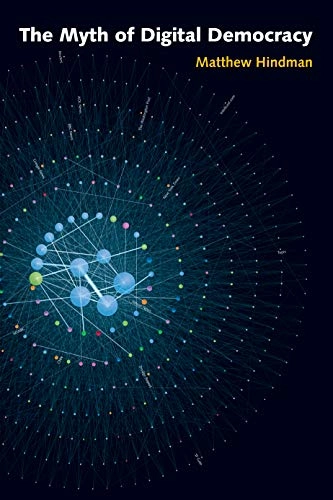
The myth of digital democracy
- Utgiven: 2009
- ISBN: 9780691137612
- Sidor: 181 st
- Förlag: Princeton University Press
- Språk: Engelska
Om boken
Is the Internet democratizing American politics? Do political Web sites and blogs mobilize inactive citizens and make the public sphere more inclusive? The Myth of Digital Democracy reveals that, contrary to popular belief, the Internet has done little to broaden political discourse but in fact empowers a small set of elites--some new, but most familiar.
Matthew Hindman argues that, though hundreds of thousands of Americans blog about politics, blogs receive only a miniscule portion of Web traffic, and most blog readership goes to a handful of mainstream, highly educated professionals. He shows how, despite the wealth of independent Web sites, online news audiences are concentrated on the top twenty outlets, and online organizing and fund-raising are dominated by a few powerful interest groups. Hindman tracks nearly three million Web pages, analyzing how their links are structured, how citizens search for political content, and how leading search engines like Google and Yahoo! funnel traffic to popular outlets. He finds that while the Internet has increased some forms of political participation and transformed the way interest groups and candidates organize, mobilize, and raise funds, elites still strongly shape how political material on the Web is presented and accessed.
The Myth of Digital Democracy. debunks popular notions about political discourse in the digital age, revealing how the Internet has neither diminished the audience share of corporate media nor given greater voice to ordinary citizens.
Åtkomstkoder och digitalt tilläggsmaterial garanteras inte med begagnade böcker
Mer om The myth of digital democracy (2009)
2009 släpptes boken The myth of digital democracy skriven av Matthew Scott Hindman. Den är skriven på engelska och består av 181 sidor. Förlaget bakom boken är Princeton University Press.
Köp boken The myth of digital democracy på Studentapan och spara pengar.
Referera till The myth of digital democracy
Harvard
Hindman, M. S. (2009). The myth of digital democracy. Princeton University Press.
Oxford
Hindman, Matthew Scott, The myth of digital democracy (Princeton University Press, 2009).
APA
Hindman, M. S. (2009). The myth of digital democracy. Princeton University Press.
Vancouver
Hindman MS. The myth of digital democracy. Princeton University Press; 2009.