Begagnad
Begagnad
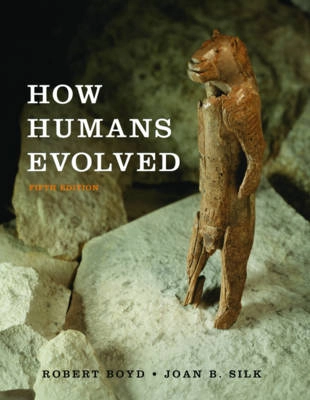
How humans evolvedUpplaga 5
- Upplaga: 5e upplagan
- Utgiven: 2009
- ISBN: 9780393932713
- Sidor: 474 st
- Förlag: W.W. Norton and Co
- Språk: Engelska
Om boken
With its unique blend of evolutionary theory, population genetics and behavioral ecology, How Humans Evolved provides students with the most contemporary and complete introduction to physical anthropology available. Robert Boyd and Joan B. Silk’s modern presentation of genetics and observable behaviors in living humans and non-human primates moves beyond merely describing anthropological finds to showing students the “big picture” ideas behind human evolution. For the Fifth Edition, Boyd and Silk have updated the text to include the best of current research in the areas of genetics, behavior and the fossil record that conveys the excitement of anthropological discovery. This new coverage reflects strengthened coverage of molecular genetics and a streamlined presentation of primatology. Features Up-to-date, with forward-looking content How Humans Evolved weaves the best of current research with classic material in a way students find accessible and compelling. For the Fifth Edition, Boyd and Silk have streamlined the coverage of primatology in Part II: Primate Ecology and Behavior. They have also strengthened the coverage of molecular genetics to include new content reflecting the growing importance of genetics to anthropological research. A focus on behavioral ecology How Humans Evolved focuses on the science behind what we know about human evolution by examining the connection between genetics and observable behavior in living humans and primates. Specifically: Part II: Primate Ecology and Behavior includes extensive coverage of behavior with full chapters on primate mating systems, cooperation and life histories and the evolution of intelligence. These chapters come before coverage of the fossil record, providing students with context for how humans lived in the past and how we evolved into who we are today. Two chapters in Part IV: Evolution and Modern Humans directly address human behavior and human mate choice and parenting, topics students find fascinating and relevant to their own lives. Accessible art and text Boyd and Silk use figures in unique, clever and accessible ways-such as using the children's game 'Cooties' to describe speciation and presenting fossil comparisons with the same orientation and scale-to convey important chapter concepts. Highlighted Key Idea statements focus students' attention on each chapter's most important concepts. Study questions at the end of every chapter extend and apply chapter readings to related concepts discussed throughout the text. With its unique blend of evolutionary theory, population genetics and behavioral ecology, How Humans Evolved provides students with the most contemporary and complete introduction to physical anthropology available. Robert Boyd and Joan B. Silk's modern presentation of genetics and observable behaviors in living humans and non-human primates moves beyond merely describing anthropological finds to showing students the 'big picture' ideas behind human evolution. For the Fifth Edition, Boyd and Silk have updated the text to include the best of current research in the areas of genetics, behavior and the fossil record that conveys the excitement of anthropological discovery. This new coverage reflects strengthened coverage of molecular genetics and a streamlined presentation of primatology.
Åtkomstkoder och digitalt tilläggsmaterial garanteras inte med begagnade böcker
Mer om How humans evolved (2009)
2009 släpptes boken How humans evolved skriven av Robert Boyd. Det är den 5e upplagan av kursboken. Den är skriven på engelska och består av 474 sidor. Förlaget bakom boken är W.W. Norton and Co.
Köp boken How humans evolved på Studentapan och spara pengar.
Referera till How humans evolved (Upplaga 5)
Harvard
Boyd, R. (2009). How humans evolved. 5:e uppl. W.W. Norton and Co.
Oxford
Boyd, Robert, How humans evolved, 5 uppl. (W.W. Norton and Co, 2009).
APA
Boyd, R. (2009). How humans evolved (5:e uppl.). W.W. Norton and Co.
Vancouver
Boyd R. How humans evolved. 5:e uppl. W.W. Norton and Co; 2009.