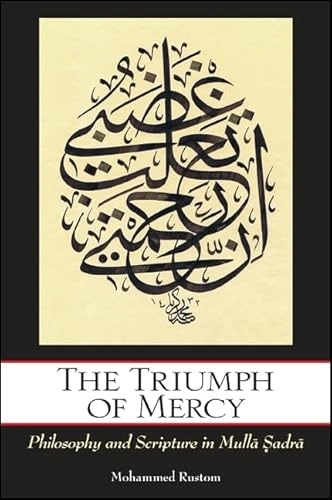
Triumph of Mercy
- Utgiven: 2013
- ISBN: 9781438443409
- Sidor: 243 st
- Förlag: State University of New York Press
- Format: Häftad
- Språk: Engelska
Om boken
Discusses philosopher Mullā Ṣadrā's commentary on the opening chapter of the Qur'ān.Winner of the 21st International Book of the Year Prize in Iran This book investigates the convergence of philosophy, scriptural exegesis, and mysticism in the thought of the celebrated Islamic philosopher Mullā adrā (d. 1050/1640). Through a careful presentation of the theoretical and practical dimensions of adrā's Qur'ānic hermeneutics, Mohammed Rustom highlights the manner in which adrā offers a penetrating metaphysical commentary upon the Fātia, the chapter of the Qur'ān that occupies central importance in Muslim daily life. Engaging such medieval intellectual giants as Fakhr al-Dīn al-Rāzī (d. 606/1210) and Ibn 'Arabī (d. 638/1240) on the one hand, and the wider disciplines of philosophy, theology, Sufism, and Qur'ānic exegesis on the other, adrā's commentary upon the Fātia provides him with the opportunity to modify and recast many of his philosophical positions within a scripture-based framework. He thereby reveals himself to be a profound religious thinker who, among other things, argues for the salvation of all human beings in the afterlife.
Åtkomstkoder och digitalt tilläggsmaterial garanteras inte med begagnade böcker
Mer om Triumph of Mercy (2013)
I juli 2013 släpptes boken Triumph of Mercy skriven av Mohammed Rustom. Den är skriven på engelska och består av 243 sidor. Förlaget bakom boken är State University of New York Press.
Köp boken Triumph of Mercy på Studentapan och spara pengar.
Referera till Triumph of Mercy
Harvard
Rustom, M. (2013). Triumph of Mercy. State University of New York Press.
Oxford
Rustom, Mohammed, Triumph of Mercy (State University of New York Press, 2013).
APA
Rustom, M. (2013). Triumph of Mercy. State University of New York Press.
Vancouver
Rustom M. Triumph of Mercy. State University of New York Press; 2013.